
Water Quality Monitoring and Enhancement Services
AVC delivers specialized water quality monitoring and enhancement services, focusing on rigorous water quality assessments and testing to restore and sustain vibrant aquatic ecosystems. Our certified specialists employ advanced bioremediation, bacterial and enzymatic nutrient removal, probiotic and flocculant-driven water clarity restoration, and organic sediment reduction to address nutrient overload, sedimentation, and water clarity issues. Poor water quality, driven by excessive nutrients, sediments, or invasive vegetation, threatens aquatic life, ecosystem functionality, and water usability. We provide targeted, eco-friendly services, including comprehensive water quality testing, turbidity control, and vegetation management, across diverse aquatic environments, including:
List of Serviceable Areas:
- Public and Private Lakes and Ponds
- Stormwater Treatment Areas and Retention Ponds
- Rivers and Streams
- Coastal and Estuarine Waterways
- Municipal Reservoirs and Water Supply Systems
- Golf Course and Community Water Features
- Constructed Wetlands
- Irrigation Canals and Agricultural Waterways
- Recreational Water Bodies and Fisheries
- Industrial Retention Ponds
- Flood Control Basins
- Marinas and Harbor Waterways
- Urban Ornamental Ponds and Fountains
- Aquaculture Ponds
- Wildlife Refuge Water Bodies
- Wetland Mitigation Sites
Description of Serviceable Areas:
- Public and Private Lakes and Ponds: Conducting water quality testing and assessments, using bioremediation and probiotic treatments to enhance clarity and ecological health.
- Stormwater Treatment Areas and Retention Ponds: Performing nutrient and sediment monitoring, applying bacterial nutrient removal to improve water quality in runoff systems.
- Rivers and Streams: Assessing water quality parameters and implementing enzymatic nutrient removal and vegetation harvesting to restore flow and aquatic vitality.
- Coastal and Estuarine Waterways: Testing water quality and using flocculant-driven restoration and organic sediment reduction to protect sensitive coastal ecosystems.
- Municipal Reservoirs and Water Supply Systems: Conducting comprehensive water quality assessments to ensure clean, safe water.
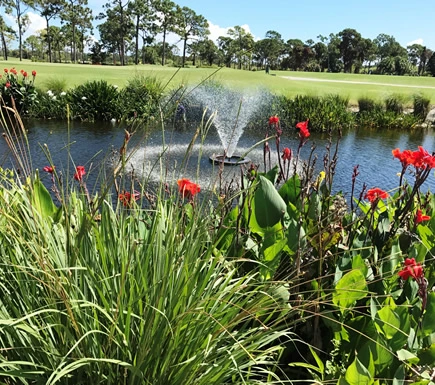
- Golf Course and Community Water Features: Monitoring water clarity and nutrients, using bioremediation to maintain aesthetic and functional water bodies.
- Constructed Wetlands: Testing water quality and applying bacterial and enzymatic treatments to enhance wetland performance for water treatment and habitat support.
- Irrigation Canals and Agricultural Waterways: Assessing turbidity and nutrients, using probiotic treatments and vegetation removal to ensure efficient water delivery.
- Recreational Water Bodies and Fisheries: Performing water quality testing and bioremediation to support healthy ecosystems for recreation and fishing.
- Industrial Retention Ponds: Monitoring sediment and nutrients, applying flocculant and bacterial treatments to meet environmental standards.
- Flood Control Basins: Testing water quality and using organic sediment reduction and vegetation harvesting to maintain functionality and water quality.
- Marinas and Harbor Waterways: Conducting water quality assessments and implementing nutrient removal to ensure clean, navigable waters.
- Urban Ornamental Ponds and Fountains: Testing water parameters and providing probiotic clarity restoration for aesthetic enhancement.
- Aquaculture Ponds: Monitoring nutrients and applying bacterial treatments and aeration to optimize water quality for aquatic production.
- Wildlife Refuge Water Bodies: Assessing water quality and using bioremediation to maintain ecological health and biodiversity in protected areas.
- Wetland Mitigation Sites: Performing water quality testing and enzymatic nutrient removal to ensure compliant, functional mitigation ecosystems.
Detailed Service Options:
- Water Quality Assessments and Testing: Conducting detailed analyses of water parameters, including pH, dissolved oxygen, nutrients, and contaminants, to evaluate ecosystem health.
- Nutrient Removal through Bioremediation: Utilizing natural processes and microorganisms to remove excess nutrients like nitrogen and phosphorus, preventing eutrophication.
- Bacterial and Enzymatic Nutrient Removal: Applying specialized bacteria and enzymes to break down and remove nutrients, enhancing water quality and ecosystem balance.
- Probiotic and Flocculant-Driven Water Clarity Restoration: Using probiotics and flocculants to aggregate suspended particles, improving water clarity and reducing turbidity.
- Organic Sediment Reduction: Implementing biological and mechanical methods to reduce organic sediment buildup, improving water depth and quality.
- Turbidity Control: Employing treatments like flocculants and vegetation management to reduce suspended particles and enhance water clarity.
- Harvesting/Mechanical Removal of Nuisance Vegetation: Physically removing invasive or excessive aquatic plants to improve water quality and flow.
- Water Clarity Monitoring: Regularly assessing water transparency to guide restoration efforts and ensure optimal conditions for aquatic life.
- Sediment and Nutrient Monitoring: Tracking sediment and nutrient levels to identify sources of pollution and inform targeted remediation strategies.
- Algae Control and Management: Applying eco-friendly treatments to control excessive algal growth, maintaining water quality and ecosystem balance.