

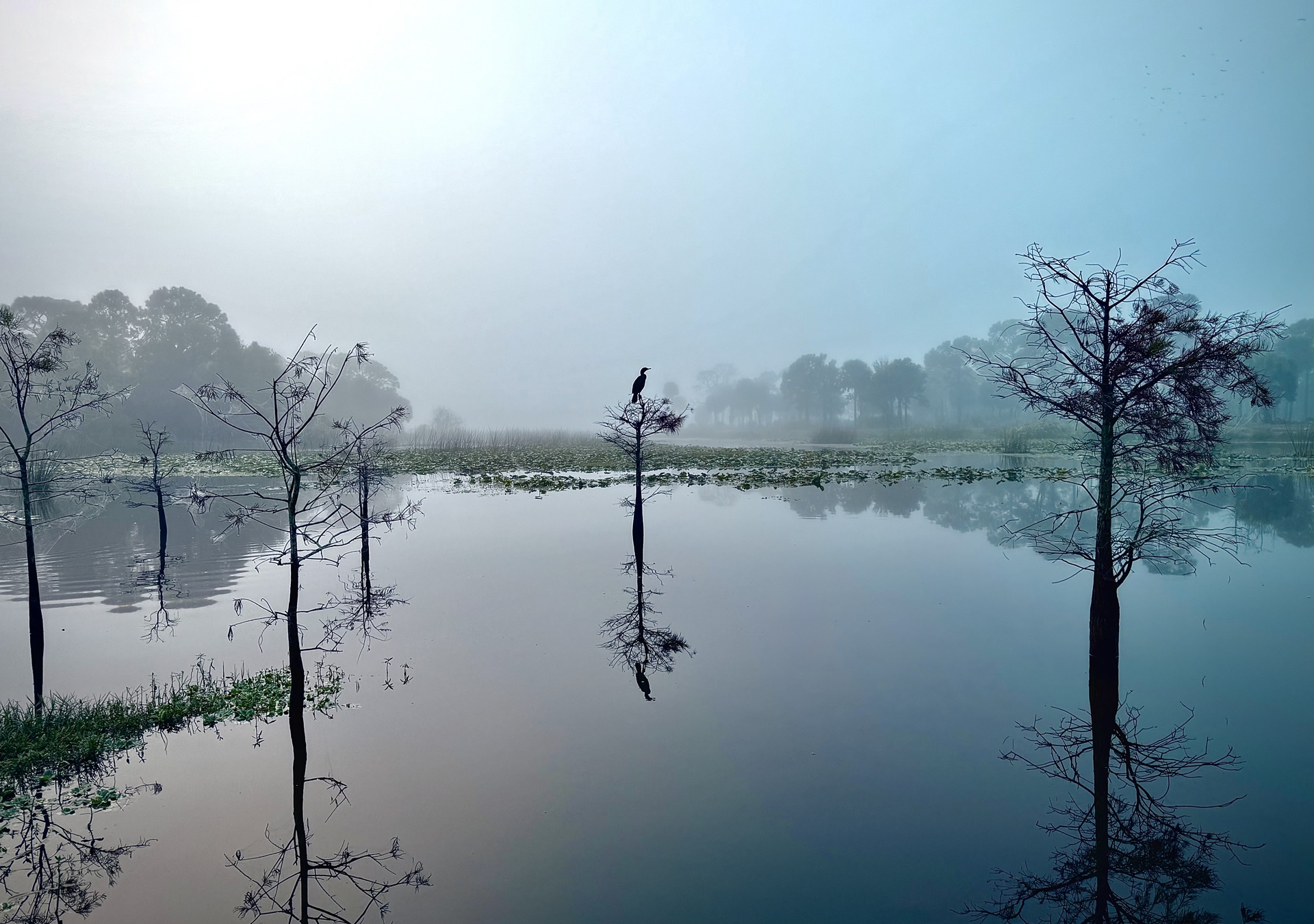
Rooted in Stewardship: How AVC is Leading the Future of Environmental Services
This year marks four decades of Aquatic Vegetation Control (AVC) delivering science-based and across Florida, helping protect waterways, wetlands, and natural ecosystems through sustainable, long-term solutions. For 40 years, Aquatic Vegetation Control (AVC) has played a quiet but essential role in protecting waterways, wetlands, and natural ecosystems through sustainable, long-term solutions. What began in 1986 as a small family-owned vegetation management company has grown into a trusted environmental services leader guided by science, experience, and a deep sense of responsibility to the communities and ecosystems it serves.
That growth didn’t happen overnight. It happened project by project, waterway by waterway, and through a steady commitment to doing the work the right way.
A Legacy of Environmental Stewardship Since 1986
AVC was founded in Florida with a simple but meaningful goal: to provide reliable vegetation management services while respecting the natural systems at the heart of the work. In the early years, that meant hands-on projects and a small team focused on quality and consistency.
Today, AVC employs 110 full-time team members and operates from multiple locations across the state. While the company's scale has changed, its approach has not. The focus remains on thoughtful planning, responsible execution, and long-term environmental outcomes, not quick fixes.
That continuity has helped AVC build lasting relationships with municipalities, agencies, and private partners throughout Florida.
100% Employee-Owned: A Culture Built on Accountability
One of the most defining aspects of AVC today is its ownership structure. The company is now 100% employee-owned, giving team members a direct stake in both the company’s success and its future.
Employee ownership fosters a different mindset. When the people doing the work are also the owners, accountability comes naturally. Decisions are made with longevity in mind—not just for the business, but for the environments and communities impacted by the work.
This ownership model also supports AVC’s internal sustainability culture, including ongoing training in invasive species management, native plant identification, and integrated pest management (IPM) techniques. AVC hosts an annual company-wide training conference and actively supports employee certifications and continuing education through environmental professional organizations.
It’s a structure that reinforces pride, responsibility, and a shared commitment to excellence across every level of the organization.
A Mission Focused on Sustainability and Community Impact
AVC’s mission reflects the evolution of both the company and the environmental challenges it addresses:
To lead the environmental services industry by providing innovative solutions that safeguard natural resources, support community well-being, and promote sustainability for future generations.
This mission is more than a statement. It guides how projects are evaluated, how services are delivered, and how success is measured. Sustainability is not treated as a trend or an add-on—it is foundational to AVC’s work.
AVC’s values further reinforce this commitment, emphasizing environmental stewardship, empowering team members, client satisfaction, and community citizenship. Together, these principles shape how AVC approaches every project, partnership, and community it serves.
Comprehensive Environmental Services Backed by Science
Over the decades, AVC’s service offerings have expanded alongside advances in environmental science and land management practices. Today, the company provides a broad range of environmental services, including aquatic vegetation management, ecosystem restoration, water-quality enhancement, and integrated pest management.
Each project is approached with a site-specific mindset. Rather than relying on one-size-fits-all methods. AVC evaluates environmental conditions, usage needs, and long-term goals before implementing a plan.
AVC’s IPM-based approach combines physical, mechanical, biological, and carefully selected low-toxicity chemical methods. This includes the use of EPA-classified reduced-risk herbicides, native plant restoration, biological nutrient removal, and ongoing monitoring to ensure effective, low-impact outcomes.
This thoughtful, science-based approach helps ensure that solutions are effective, sustainable, and appropriate for the ecosystems involved.
Integrated, Site-Specific Solutions for Complex Ecosystems
Natural environments are complex, and effective management requires flexibility. AVC utilizes integrated strategies that may include biological, mechanical, cultural, and targeted chemical methods—always selected based on environmental conditions and regulatory standards.
Operating across South Florida and statewide, AVC works in diverse environments, including urban waterways, public lakes, stormwater systems, and sensitive natural habitats, and partners with local governments and environmental agencies to deliver measurable, site-specific results.
Key services provided by AVC include:
- Aquatic vegetation and aquatic weed control services
- Invasive species management in lakes, canals, and wetlands
- Lake and waterway restoration services
- Integrated pest management (IPM) programs
- Water quality enhancement and nutrient reduction solutions
- Native plant restoration and habitat enhancement
In 2025 alone, AVC implemented measurable sustainability actions across South Florida, including the installation of more than 40,660 native plants to support biodiversity and ecosystem resilience. The company also mechanically harvested over 146,860 pounds of algae and invasive plant material, helping physically remove nutrient loads from waterways rather than allowing them to remain in the system.
To further enhance water quality, AVC applied over 1000 pounds of probiotic bacteria to digest organic matter and more than 3,650 gallons of probiotic and nutrient-binding agents to sequester phosphorus and nitrogen in sediments. These efforts collectively mitigated and estimated 2,850 pounds of phosphorus and 405 pounds of nitrogen, delivering tangible improvements in water clarity and long-term ecosystem health.
The goal is to achieve balance. Protecting waterways, wetlands, and landscapes means addressing immediate challenges while also supporting long-term ecological health.
By combining field experience with evolving best practices, AVC continues to adapt its methods as environmental needs change.
Stewardship Beyond the Job Site
AVC’s commitment to sustainability extends beyond field operations.
The company actively engages in waste reduction and recycling initiatives, including the recycling of over 23,260 pounds of metal and more than 416 cubic yards of cardboard and paper. AVC also prioritizes reusable herbicide containers, reduced packaging, and responsible sourcing of materials to minimize its operational footprint.
Community engagement is equally important. AVC team members regularly participate in scientific conferences, public workshops, restoration projects, and environmental education initiatives through organizations such as UF/IFAS and regional invasive species management groups. Many employees also serve in leadership or board roles within professional environmental societies, further extending AVC’s impact beyond its projects.
Looking Ahead: Sustainability, Innovation, and Public Responsibility
As Florida’s environmental challenges continue to evolve, so does AVC’s role in addressing them. The company remains committed to innovation, responsible stewardship, and public accountability—not only in the services it provides but also in how it measures, monitors, and refines its approach.
Looking ahead, AVC continues to invest in research collaborations, long-term environmental monitoring, and data-driven decision-making, including GIS mapping, water quality metrics, and site-specific impact assessments. These efforts ensure that sustainability is not just an aspiration but a measurable, continuously improving practice.
As we celebrate four decades, that commitment is as strong as ever.


